

BioEcoUVa researchers from the PROCEREALtech group have contributed to a new study published in Food Hydrocolloids, investigating how controlled microwave treatment modifies the molecular structure and functional properties of different starches.
Starch functionality plays an important role in determining the behaviour of food materials during processing and in the final properties of food products. Its behaviour is closely related to its molecular and supramolecular structure, particularly the organisation of amylose and amylopectin.
In the study “Molecular basis of changes in pasting and rheological properties of starches physically modified by microwave radiation”, researchers analysed the effects of controlled microwave treatment on a range of pure starches, including normal and waxy maize, normal and waxy rice, wheat, potato and tapioca starches. The treatment was carried out at 100 °C, with 25% moisture for 30 minutes.
The research combined molecular and rheological characterisation techniques to investigate how changes at the molecular level are reflected in the pasting behaviour and viscoelastic properties of starch gels.
The results show that microwave treatment does not produce a uniform response across different starch sources. Instead, the structural and rheological changes depend strongly on the botanical origin and molecular composition of the starch.
Waxy starches showed increases in very short amylopectin chains and molecular degradation, while their rheological response remained relatively limited. Potato starch, in contrast, exhibited the most pronounced changes in rheological properties despite showing comparatively limited molecular degradation, suggesting that supramolecular reorganisation plays an important role in its response to microwave treatment.
Wheat and tapioca starches displayed moderate structural changes accompanied by improved gel stability. The study also found that rice starches showed similar pasting and rheological responses, with the fine structure of amylopectin playing a particularly important role.
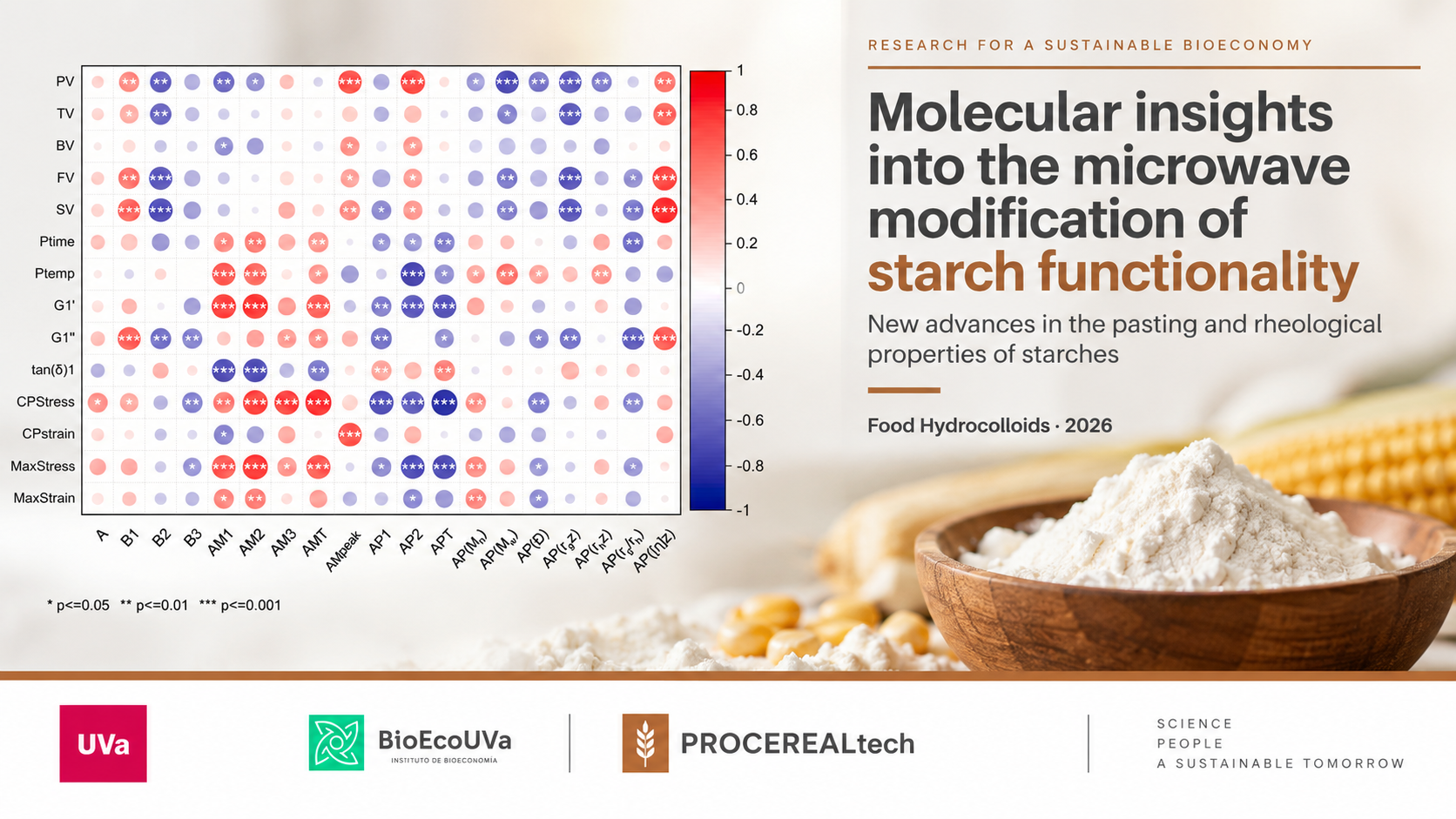
The researchers identified correlations between specific molecular fractions and the strength and firmness of starch gels. In particular, short and medium amylose chains were associated with stronger and firmer gels, while short amylopectin chains were associated with weaker gels.
These findings provide a better understanding of the mechanisms underlying microwave-induced modification of starch and contribute to the development of approaches for tailoring starch functionality through controlled processing.
The study was carried out by Raúl Ricardo Mauro, Zhihang Li, Andreas Blennow, Ainhoa Vicente and Felicidad Ronda, with researchers affiliated with the PROCEREALtech Group at BioEcoUVa, University of Valladolid, as well as the University of Copenhagen and Jiangnan University.
📖 Read the full article:
Molecular basis of changes in pasting and rheological properties of starches physically modified by microwave radiation
Food Hydrocolloids, Volume 176, 2026, 112581
Food Hydrocolloids — PROCEREALtech
BioEcoUVa researchers from the PROCEREALtech group have contributed to a new study published in Food Hydrocolloids, investigating how controlled microwave treatment modifies the molecular structure and functional properties of different starches.
Starch functionality plays an important role in determining the behaviour of food materials during processing and in the final properties of food products. Its behaviour is closely related to its molecular and supramolecular structure, particularly the organisation of amylose and amylopectin.
In the study “Molecular basis of changes in pasting and rheological properties of starches physically modified by microwave radiation”, researchers analysed the effects of controlled microwave treatment on a range of pure starches, including normal and waxy maize, normal and waxy rice, wheat, potato and tapioca starches. The treatment was carried out at 100 °C, with 25% moisture for 30 minutes.
The research combined molecular and rheological characterisation techniques to investigate how changes at the molecular level are reflected in the pasting behaviour and viscoelastic properties of starch gels.
The results show that microwave treatment does not produce a uniform response across different starch sources. Instead, the structural and rheological changes depend strongly on the botanical origin and molecular composition of the starch.
Waxy starches showed increases in very short amylopectin chains and molecular degradation, while their rheological response remained relatively limited. Potato starch, in contrast, exhibited the most pronounced changes in rheological properties despite showing comparatively limited molecular degradation, suggesting that supramolecular reorganisation plays an important role in its response to microwave treatment.
Wheat and tapioca starches displayed moderate structural changes accompanied by improved gel stability. The study also found that rice starches showed similar pasting and rheological responses, with the fine structure of amylopectin playing a particularly important role.
The researchers identified correlations between specific molecular fractions and the strength and firmness of starch gels. In particular, short and medium amylose chains were associated with stronger and firmer gels, while short amylopectin chains were associated with weaker gels.
These findings provide a better understanding of the mechanisms underlying microwave-induced modification of starch and contribute to the development of approaches for tailoring starch functionality through controlled processing.
The study was carried out by Raúl Ricardo Mauro, Zhihang Li, Andreas Blennow, Ainhoa Vicente and Felicidad Ronda, with researchers affiliated with the PROCEREALtech Group at BioEcoUVa, University of Valladolid, as well as the University of Copenhagen and Jiangnan University.
📖 Read the full article:
Molecular basis of changes in pasting and rheological properties of starches physically modified by microwave radiation
Food Hydrocolloids, Volume 176, 2026, 112581
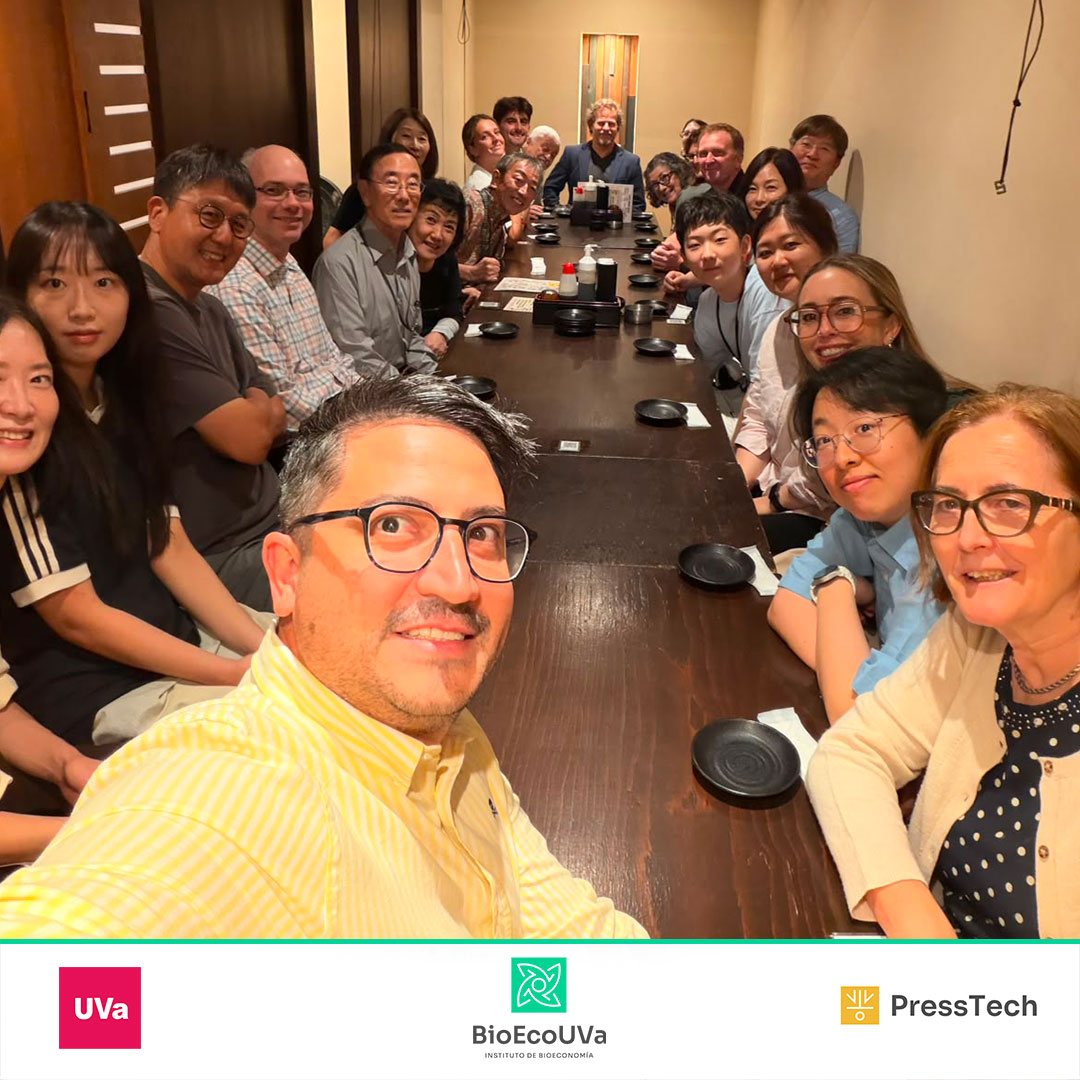
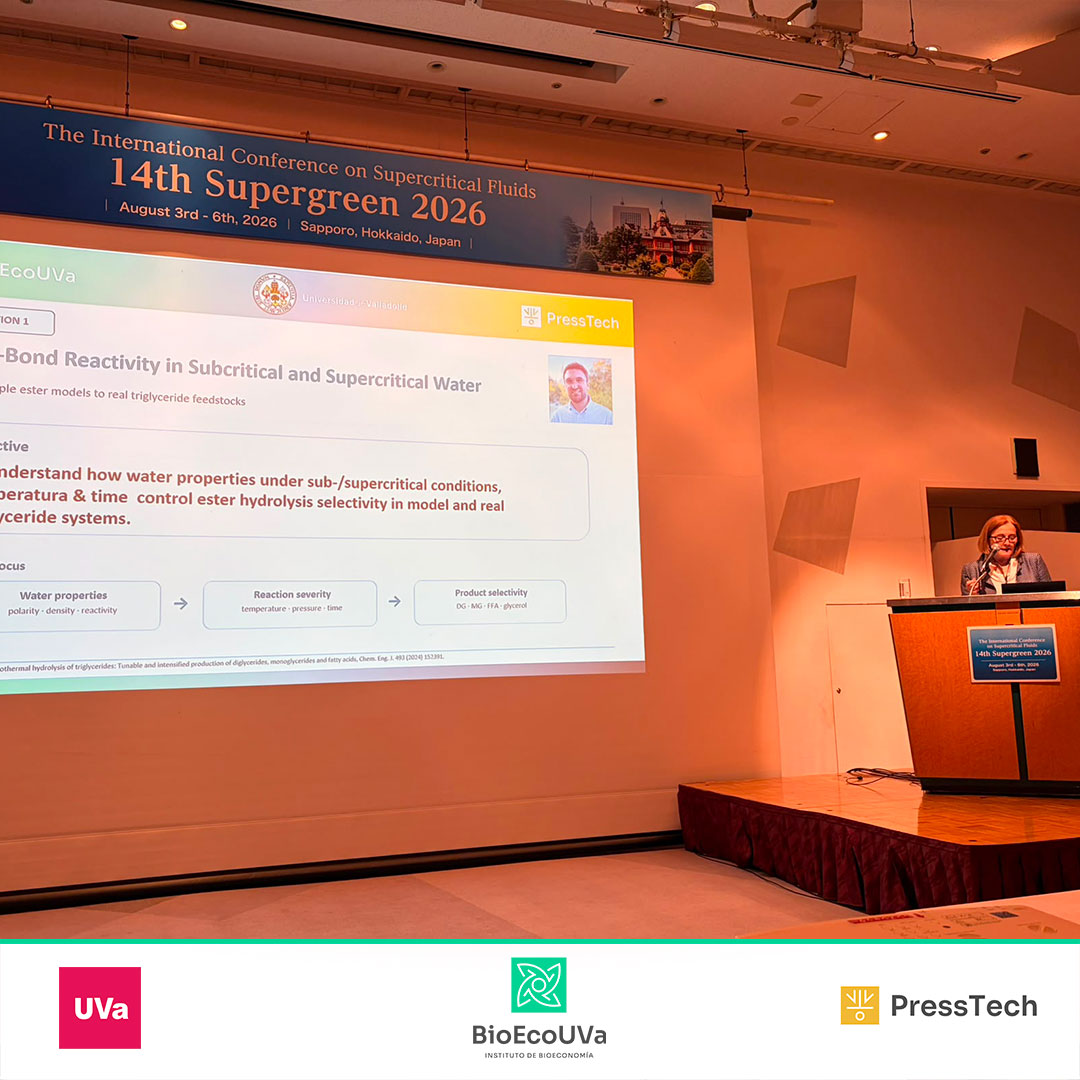
SuperGreen 2026 in Sapporo, Japan